
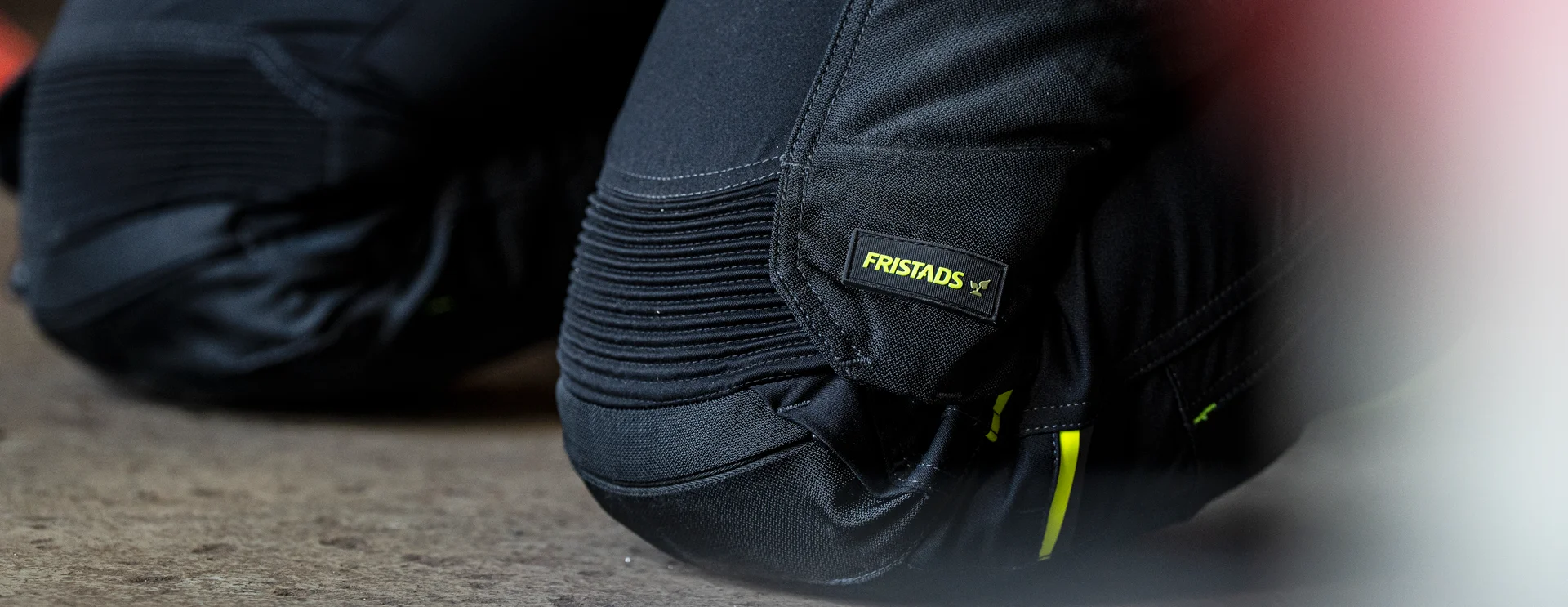

When only the best materials will do
We carefully choose the materials and fabrics for our workwear based on the performance, durability and environmental impact of the finished garment. Plus, we’re exchanging the materials in our collections on an ongoing basis, for example by swapping regular cotton for organic cotton or regular polyester for recycled polyester. We have also developed customised, more sustainable collections for several of our larger customers. To ensure that the materials live up to our quality requirements and retain their durability they go through rigorous testing, both in our lab, external partners and through wearer and industrial wash trials.
Most of our garments are made of polyester and cotton due to their high performance and durability which gives them higher quality and longevity. In addition, we use materials that have special properties or work as reinforcement in the garments.
Polyester is a great fibre for workwear thanks to its durability, strength and abrasion resistance. Polyester is a synthetic fibre generally based on fossil resources. There are also polyester fibres made from biobased resources that in some cases can be utilised in workwear.
Recycled polyester can be produced mechanically from PET bottles or chemically from various waste materials, for example production waste from the textile industry. Fristads is using recycled polyester from both PET bottles and textile waste. That way we reduce waste, extend the lifecycle of existing resources, and lessen our reliance on virgin polyester. We secure traceability by working with certified suppliers who can present relevant certifications throughout the supply chain.


Cotton offers a combination of high comfort and great technical performance and is often blended with polyester in workwear fabrics. It can withstand high laundry temperatures with maintained strength.
Fristads is committed to improving cotton farming practices globally with Better Cotton Initiative (BCI), an organisation that promotes a holistic approach to cotton farming. BCI farmers minimise the harmful impact of crop protection practices, promote water conservation and strive to protect the health of the soil as well as enhance biodiversity. BCI cotton is sourced via a chain of custody model called mass balance. This means that the cotton is not physically traceable to end products, however, the farmers benefit from the demand for BCI cotton in equivalent volumes to those we ‘source.’ At Fristads we are committed to source at least 50% BCI cotton by 2030.

In some of our products, we have also replaced conventionally produced cotton with organic cotton, which is cultivated using natural processes to nurture the health of the soils and surrounding ecosystems. Organic cotton eliminates the usage of toxic fertilisers, pesticides and GMOs (Genetically Modified Organisms).
Fristads’ circular fibres are made from used workwear that has been collected and processed in a certified recycling process. To create a circular material, recycled fibres are mixed with new fibres and spun into yarn, which is either woven or knitted into new fabric. We developed our first commercial product made of 15% circular fibres in 2023 and are continuously working on finding new ways of using this innovative material.
Modacrylic is a modified version of the more commonly known fibre acrylic. It is a soft and very comfortable fabric that is used in workwear for its built-in flame-resistant properties.
Polyamide is a synthetic fibre with high abrasion resistance that can increase the longevity of a product. Also known as nylon, it is used in high-performance fibres such as Kevlar® and Cordura®.
More content for you:

At Fristads, we know that the most sustainable garment is the one that lasts – and we don’t take any shortcuts when it comes to quality.
Read more >

Fristads is in the forefront of developing circular solutions for workwear, ensuring every garment is used to its full potential.
Read more >

OUR OWN LAB
Take a peek inside Fristads’ in-house lab in Borås and find out why we give the best materials the worst possible treatment.
Read more >