

PFAS
Over the past several years, we’ve been part of the movement to ban the use of PFAS. Today, we’re proud to say that nearly all Fristads products have no intentionally added PFAS, and we’re working to transition the rest to this status. The few that still contain intentionally added PFAS are OEKO-TEX® Standard 100 certified, meaning they meet stricter limit levels than required by current EU regulations and are deemed safe for humans.
Over the past several years, we’ve been part of the movement to ban the use of PFAS. Today, we’re proud to say that nearly all Fristads’ products are PFAS-free, or in transition to become PFAS-free. The few that still contain PFAS are OEKO-TEX certified, meaning they meet stricter limit levels than required by current EU regulations and are deemed safe for human use.
But even if these garments are safe to wear, PFAS are not safe once they enter the environment, where they disrupt ecosystems and contaminate our food and drinking water. That’s why we believe phasing them out from our production is the right thing to do. It’s not the easiest path, but it’s one that drives innovation, challenges outdated norms and ultimately leads to a better future for our industry and our planet.


PFAS, or per- and polyfluoroalkyl substances, are a group of synthetic chemicals which for decades have been added to everything from nonstick pans and cosmetics to firefighting foam and food packaging. In the workwear industry, PFAS are typically added as a finish on fabrics or included in PTFE membranes to give garments specific technical properties, such as making them repel oil, dirt, water and chemicals. They are also used in membranes of some flame-retardant workwear and in leather products. To maintain the PFAS functions, the garments often need to be retreated during the washing process, which leads to further PFAS contamination throughout the products’ lifecycle.
Once released into the environment, PFAS spread quickly through soil, air, and water, where they accumulate over time. Today, they can be found almost everywhere – in groundwater, plants, fish, wildlife, and humans. It is estimated that 99% of all humans have measurable levels of PFAS in their bloodstream, even unborn babies. Research shows that even low levels of PFAS exposure is linked to serious health effects, including hormone disruption, infertility and reproduction issues, lower birth weights, impaired immune system and certain types of cancer.


In the EU, some PFAS are already banned, and a universal restriction is in the works, with some exemptions for essential use. Considering the toxic and long-lasting nature of PFAS, we have worked proactively for several years to develop workwear and Personal Protective Equipment (PPE) with no intentionally added PFAS that meet our standards as well as the needs of our users.
According to the non-profit organisation ChemSec, materials with no intentionally added PFAS can already replace the fabrics used in 75% of all PPE categories. For the remaining applications, PFAS are still considered essential – for now. But with continued research and stricter regulations, we believe innovation will quickly close that gap. A key part of phasing out PFAS is conducting thorough risk analyses at the work site to determine the actual level of protection required.
Here, you can read more about the use of PFAS in workwear and how Fristads is acting to phase them out of production:
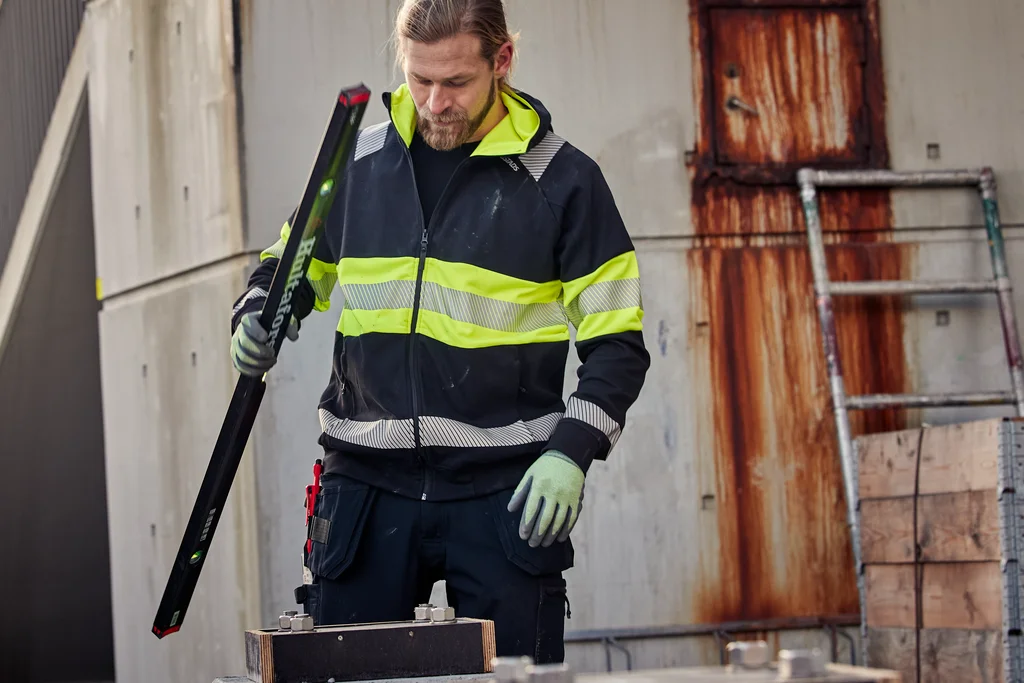
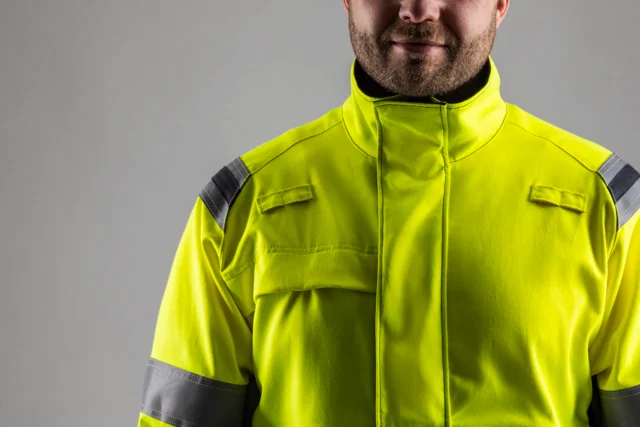
High visibility (EN ISO 20471)
High-vis garments are often treated with PFAS to boost their launderability and dirt-repelling properties, even though this is not required by the standard.
Fristads’ solution: We don’t see any reason to use PFAS for high-vis garments, since the same results can be achieved by washing the garments regularly and correctly. We have phased out intentionally added PFAS from our high-vis product range, except for our GORE-TEX jackets. Some garments are still being transitioned to no intentionally added PFAS, which means our stock of high-visibility garments will be mixed for a period of time.


Rainwear (EN 343)
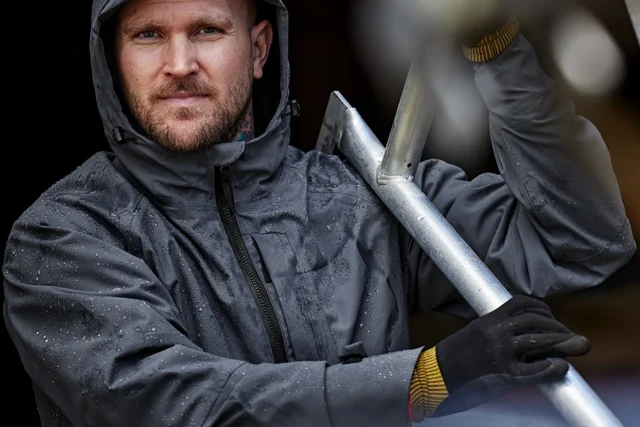
In shell garments and taped winter workwear, PFAS can be used in the DWR treatment to protect against rain and snow. PFAS can also be found in PTFE membranes, protecting against moisture and enhancing breathability.
Fristads’ solution: We have worked with our suppliers to develop alternatives that don’t sacrifice performance when it comes to weather protection. Today, we no longer manufacture new rainwear with PFAS, except for our GORE-TEX jackets. As we transition our range, some older garments with intentionally added PFAS may still be available in stock.



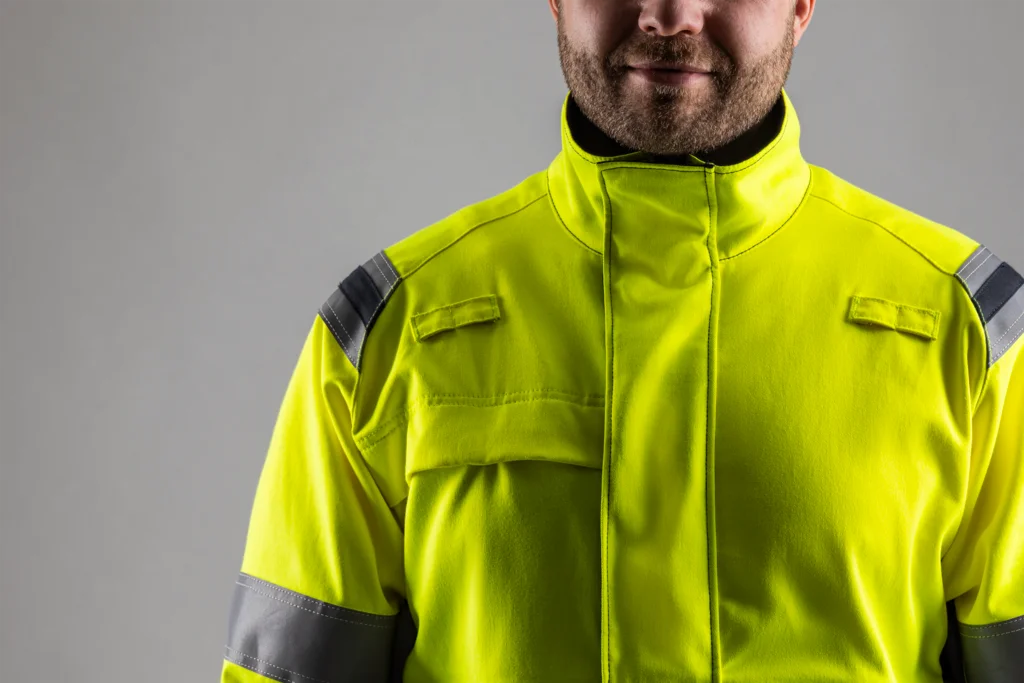
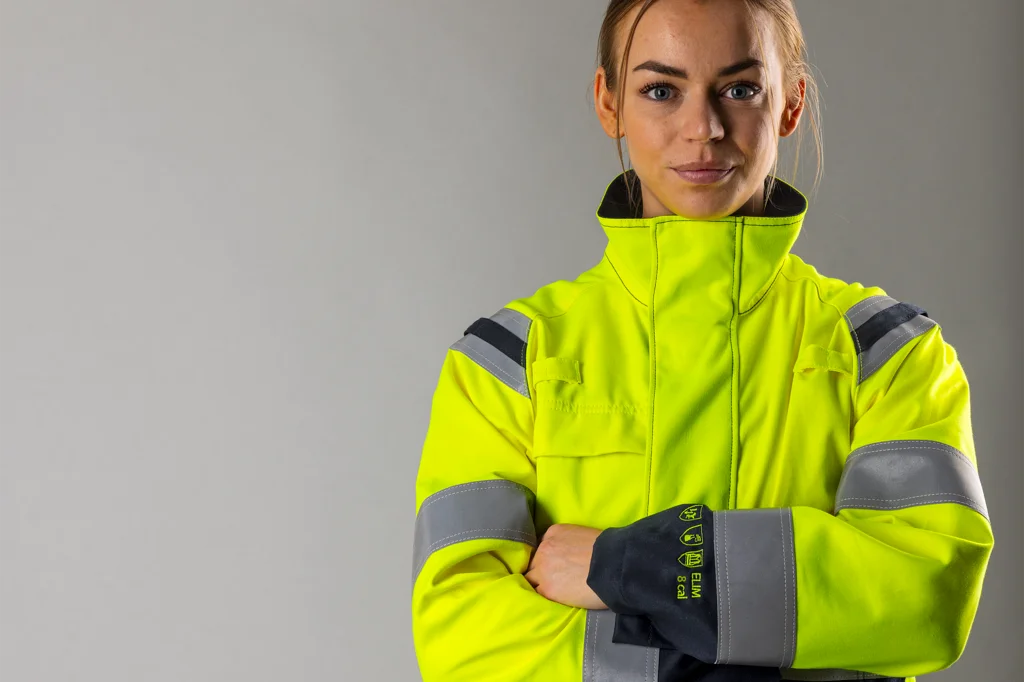
Multinorm (EN ISO 11611, EN ISO 11612, EN 61482-2)
PFAS are sometimes used in membranes of flame-protective multinorm garments – products that meet several standards. PFAS can be used as surface treatment for dirt and oil repellency, as well as in membranes for increased protection against electric arc and a higher ELIM value. The standards for multinorm garments don’t require PFAS and it is possible to achieve a high level of protection without them.
Fristads’ solution: We have worked with our suppliers to develop alternatives with no intentionally added PFAS and have transitioned our multinorm range to these alternatives. Some older garments with intentionally added PFAS may still be available in stock. The updated garments provide strong protection against electric arc and with regular and correct washing, the protection level is retained over time.
Liquid chemicals (EN 13034)
PFAS are often used to meet the standard EN 13034, providing limited protection against certain chemicals when there is a risk of small splash exposure, and a complete chemical barrier is not required. PPE certified according to EN 13034 is tested for repellency against four chemical groups and is required to pass the test for at least one of them. Materials with no intentionally added PFAS are currently only available for protection against the water-based chemicals sulphuric acid and sodium hydroxide, while protection against oil-based chemicals butanol and O-xylene still requires PFAS. PPE certified according to EN 13034 is exempt from EU’s PFAS ban for now, but the focus is on developing alternatives with no intentionally added PFAS for oil-based chemicals as well.
Fristads’ solution: We have developed a collection of workwear certified to EN 13034 with no intentionally added PFAS, with protection against sulphuric acid and sodium hydroxide. A few of our flame-retardant garments with protection against oil-based chemicals still contain intentionally added PFAS. Considering the toxic and long-lasting nature of PFAS, these products will either be phased out or updated with materials that contain no intentionally added PFAS. After carefully evaluating the environments where our workwear certified to EN 13034 is typically used, we are confident that the updated finishes meet the needs of our customers. To minimise waste and ensure that already produced material and garments are used to their full potential, the transition will be incremental.
Outdoor
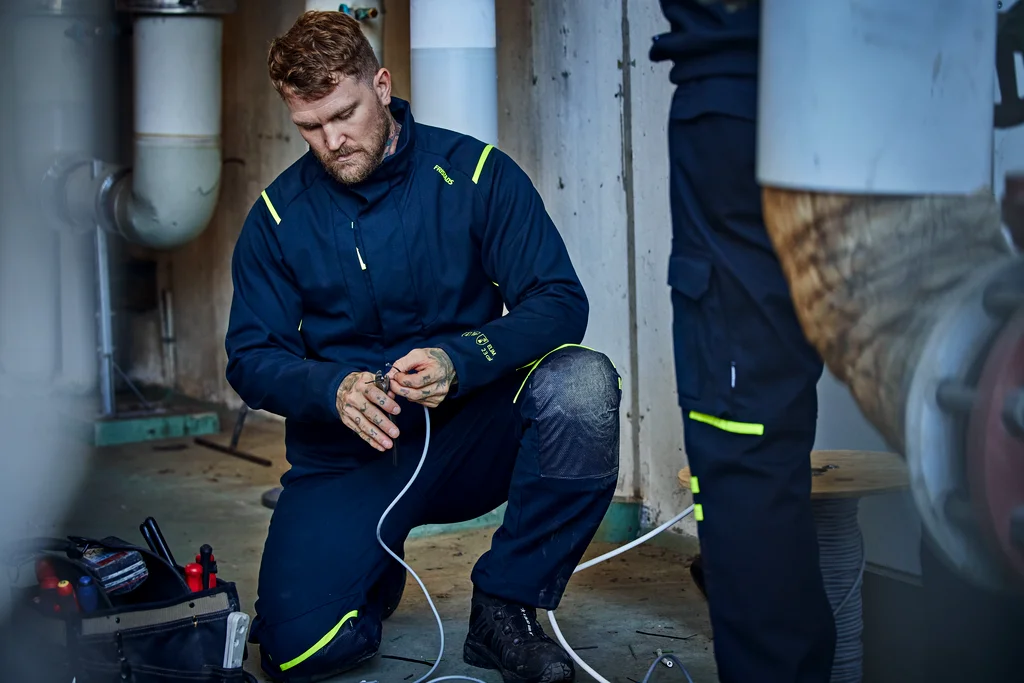
PFAS have traditionally been used by the outdoor industry in waterproof garments, even though this use is not considered essential and there are plenty of alternatives with no intentionally added PFAS.
Fristads’ solution: Our Outdoor collection has been made with no intentionally added PFAS from the start – and we intend to keep it that way.




Based on our active assortment, 99% of Fristads’ products either have no intentionally added PFAS or are in transition to achieve this status:
- No intentionally added PFAS: 85%
- In transition to no intentionally added PFAS: 14%
- Contains intentionally added PFAS: 1%
As of right now, 85% of Fristads’ range has no intentionally added PFAS and 14% is in transition to achieve this status. To minimise waste and ensure that already produced materials and garments are fully used, the transition is taking place incrementally. This also means that for a period we will have a mixed stock. For the remaining 1% of the range (nine products), there is currently no suitable alternative to intentionally added PFAS, but we are actively working with our suppliers to find solutions for these products as well. Therefore, putting a specific end date on the phase-out is difficult, but we’re moving as quickly as we can.
To be transparent with our customers, we provide PFAS information on the product level. In our webshop, each product is labeled either “no intentionally added PFAS” or “In transition to no additional PFAS.” We have decided not to add any new products containing intentionally added PFAS to our range, but some existing models that are in transition have a mixed stock. Once all the garments with intentionally added PFAS have sold out, the labelling of the product will change to “No intentionally added PFAS.
When a product on our website is labelled “No intentionally added PFAS” it means that no PFAS have been added intentionally to the product during any stage of the production. Fristads’ assortment is certified to OEKO-TEX® Standard 100 and meets strict limit values for PFAS as well as other chemicals. However, since PFAS are commonly found in soil, air and water, nobody can guarantee that a product is 100% PFAS free.
The vast majority of Fristads’ products are certified according to OEKO-TEX® Standard 100 certificates Ö 97-055 and SE 23-310, which don’t allow any intentionally added PFAS. Part of our PPE assortment is certified to SE 23-311, where some PFAS are allowed. As we continue to phase-out intentionally added PFAS, we will gradually move products from certificate SE 23-311 to certificates Ö 97-055 and SE 23-310. All three certificates have strict limit values for both regulated and unregulated chemicals, meaning stricter requirements than current legislation. You can read more about our OEKO-TEX® certifications here.
There is currently no evidence that PFAS are absorbed through the skin. Rather, the concern is with PFAS leeching into the environment during the production or washing of the garments, since it may pollute food and drinking water. As an extra safeguard, Fristads’ products are certified according to OEKO-TEX® Standard 100, which sets strict limit values for PFAS and other substances.


